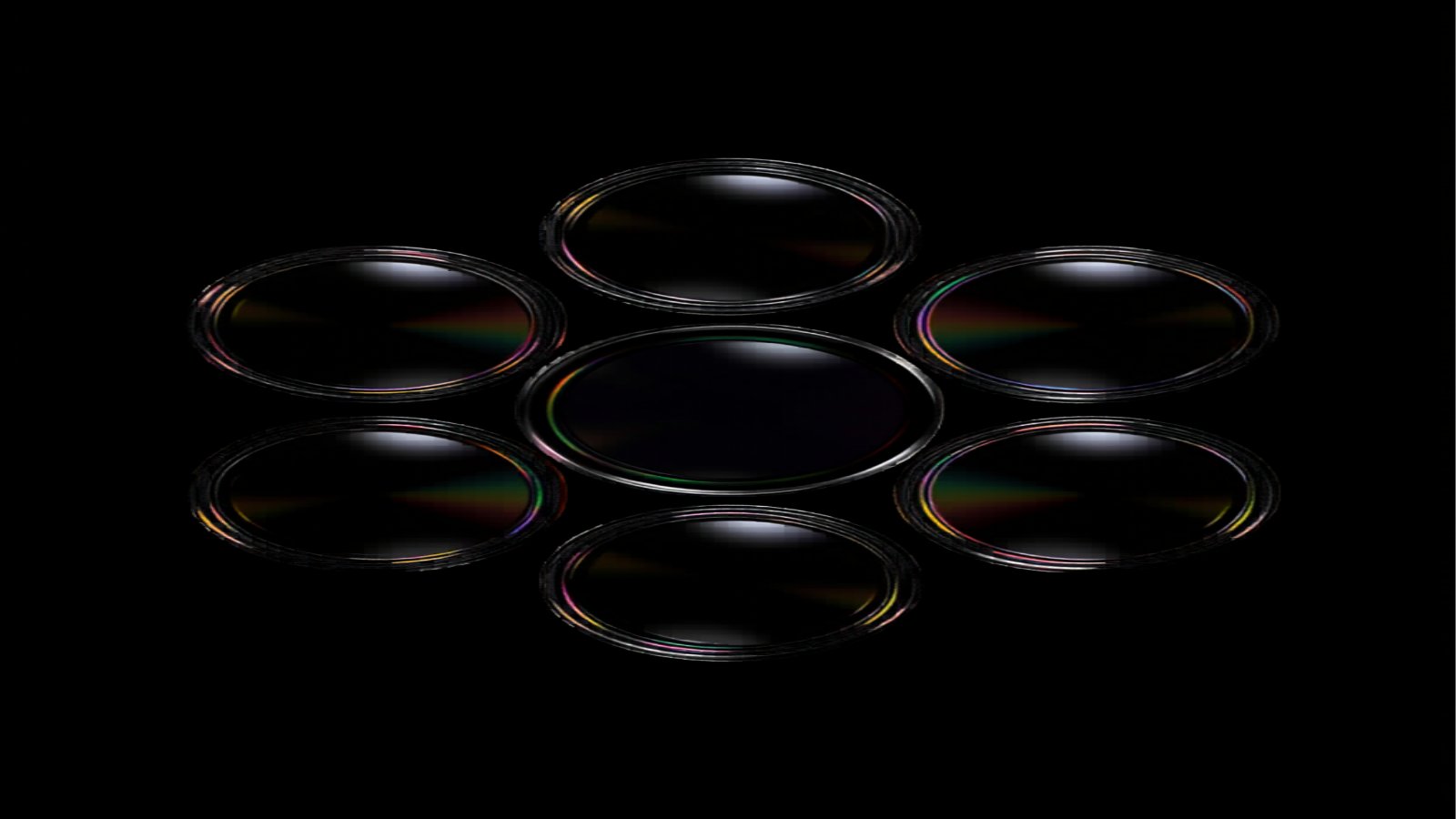
Optical Filters
Bandpass, dichroic, edge, and specialty filters for spectroscopy, fluorescence microscopy, machine vision, and laser applications.
Bandpass Filters
Narrowband and wideband optical bandpass filters for fluorescence, Raman spectroscopy, machine vision, and laser line isolation.
- ● FWHM from 1nm to 80nm
- ● UV to SWIR wavelengths
- ● OD4+ blocking
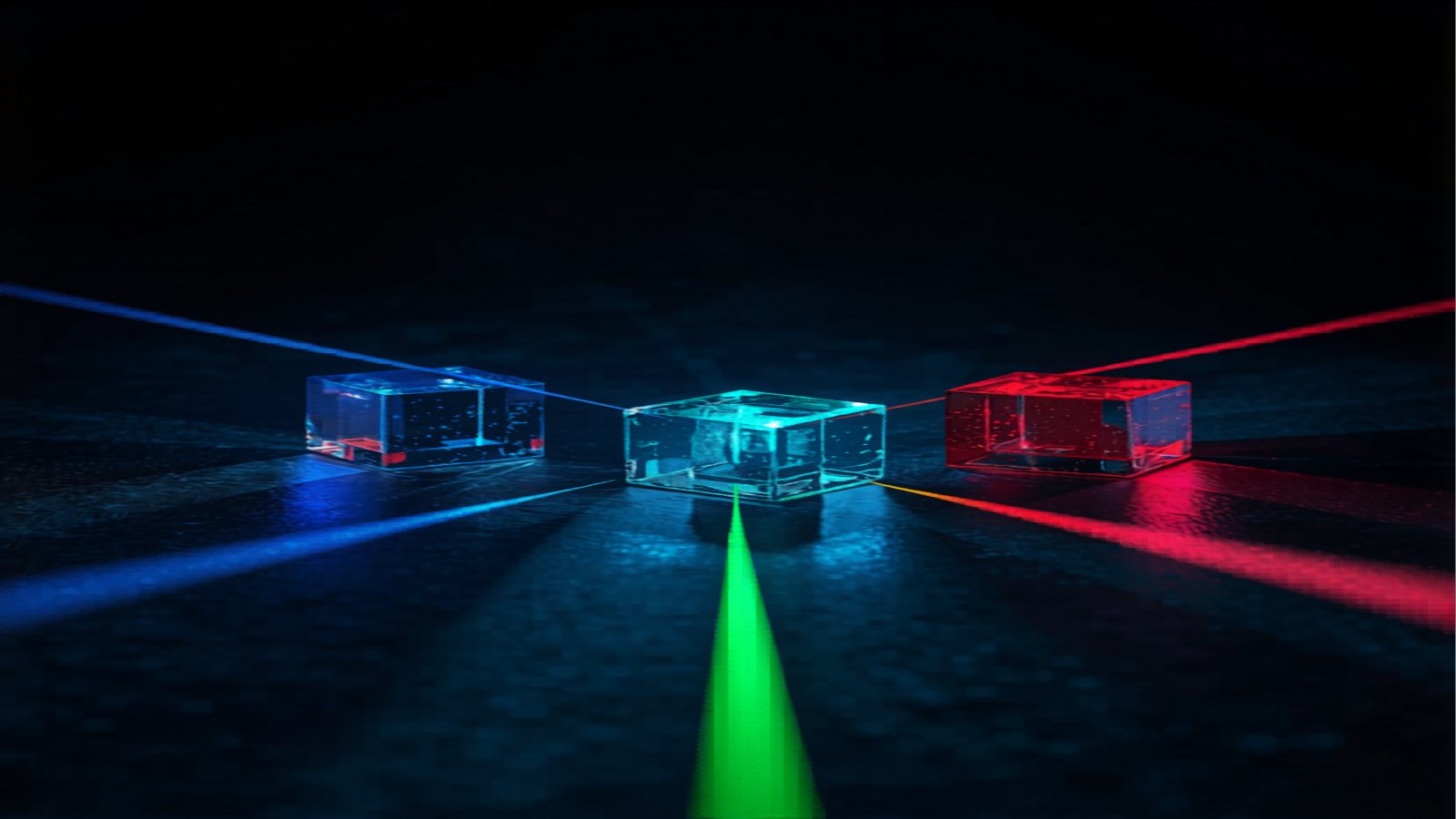
Dichroic Mirrors
Wavelength-selective mirrors that reflect one band while transmitting another. Essential for fluorescence microscopy, projection, and beam combining.
- ● Sharp transition edges (<5nm)
- ● High transmission and reflection
- ● Custom wavelengths available
Longpass / Edge Filters
Sharp-cut longpass and shortpass edge filters for separating excitation and emission in fluorescence, blocking UV, or isolating spectral bands.
- ● OD6+ blocking of rejection band
- ● Transition widths <20nm
- ● Hard-coated for durability
IR Cut Filters
Infrared blocking filters for CMOS sensors, machine vision cameras, and display optics. Remove IR contamination for accurate color imaging.
- ● Hot mirror or absorptive types
- ● Cut-on from 650nm to 750nm
- ● High visible transmission
Fluorescence Filter Sets
Matched excitation, emission, and dichroic filter sets for common fluorophores. FITC, DAPI, TRITC, Cy5, GFP, and custom sets.
- ● Optimized for specific fluorophores
- ● High signal-to-noise
- ● Standard microscope formats
Laser Line Filters
Ultra-narrow bandpass filters centered on common laser wavelengths. Isolate laser lines from broadband background or ASE.
- ● FWHM 1-3nm typical
- ● 405, 532, 633, 785, 1064nm stock
- ● >90% peak transmission
Choosing the Right Optical Filter
The most important spec for any optical filter is its spectral profile: what wavelengths does it pass, and what does it block? For fluorescence, you want high transmission at your emission wavelength and deep blocking (OD4-OD6) at your excitation wavelength. For Raman spectroscopy, you need extremely narrow notch or edge filters with steep transitions.
Hard-coated vs. soft-coated. Modern interference filters use hard oxide coatings (sputtered or IBS deposited) that resist moisture, temperature shifts, and handling damage. Older soft-coated filters degrade faster and require careful environmental control. For any new purchase, insist on hard-coated.
Angle sensitivity. All interference filters shift to shorter wavelengths as the angle of incidence increases. A filter spec'd at 532nm at 0 degrees may pass 528nm at 15 degrees. If your optical path has a high cone angle (low f-number), account for this shift or use filters designed for convergent beams.
Custom filters are common in this space. If you need a specific center wavelength, bandwidth, or blocking profile that is not available off-the-shelf, most manufacturers offer custom runs with minimum order quantities as low as 5-10 pieces.
Request a Custom Quote
Need custom specs, bulk pricing, or OEM quantities? Tell us what you need.
Quote request submitted!
We will be in touch within 1 business day.
Something went wrong.
Please email us directly at quotes@photonpicks.com